
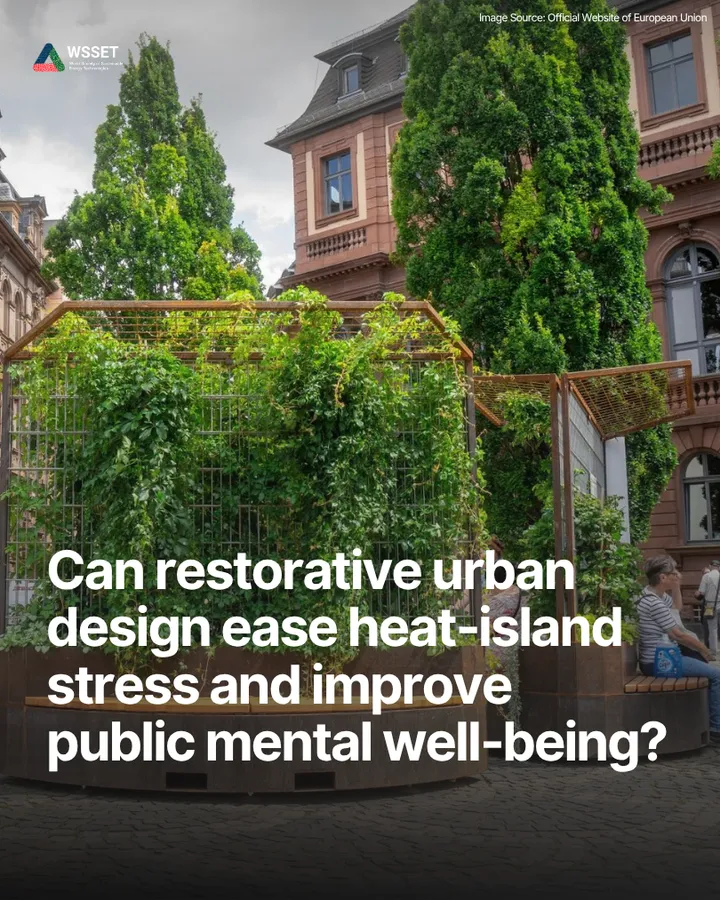
This study examines how urban landscape design can help address these challenges, using Qaitbay Citadel Plaza in Alexandria, Egypt, as a case study. Combining visitor questionnaires with ENVI-met microclimate simulations, the research explores how cooling pavements, vegetation and shading can improve thermal comfort and support better mental well-being.
Key findings:
- Site surveys identified several issues at Qaitbay Citadel Plaza, including insufficient shade, heat-absorbing ground materials, poor accessibility and safety concerns, all contributing to visitors' physical and psychological discomfort.
- Simulations of different design scenarios found that the optimal proposal could reduce minimum temperatures by 2.06°C and maximum temperatures by 3.59°C through the use of cool pavements, vegetation and water-related landscape elements.
- The findings highlight how restorative urban design can help mitigate urban heat and improve thermal comfort, creating more supportive public spaces for mental well-being in hot coastal cities.
This article was published in the WSSET affiliate journal, Future Cities and Environment.
For more information on our affiliate journals, visit: wsset.org/journals
Read the full article here: https://cspub-fce-submission.org/index.php/fce/article/view/40