
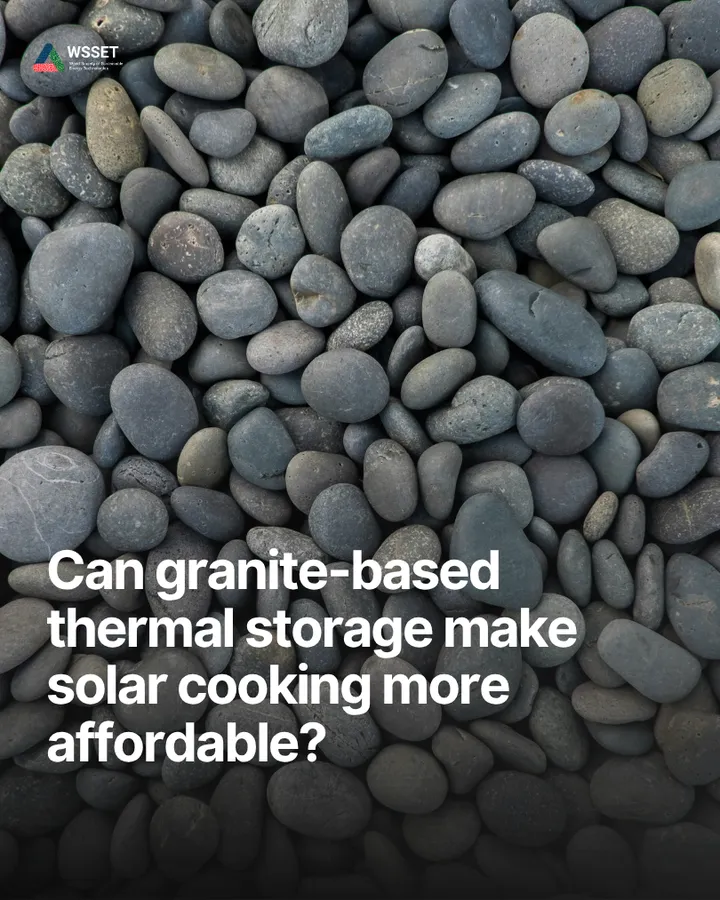
However, storing heat efficiently and affordably remains a key challenge. This study compares pure erythritol with an erythritol-granite pebble composite as thermal energy storage materials, examining their heating rates, heat retention and cooking performance under real food preparation conditions.
Key findings:
- The erythritol-granite composite heats up faster and reduces material costs by nearly half compared with pure erythritol, although it releases stored heat more quickly.
- Pure erythritol maintains a more stable temperature for longer, making it better suited to cooking multiple meals when sunlight is unavailable.
- Both materials successfully cooked rice, vegetables and chicken, demonstrating the potential of the composite mixture as a lower-cost thermal storage solution for off-grid solar cooking.
The findings highlight a trade-off between affordability and heat retention, offering insights into the development of more accessible solar cooking technologies.
This article was published in the WSSET affiliate journal, Green Technology & Innovation.
For more information on our affiliate journals, visit: wsset.org/journals
Read the full article here: https://caravelpress.com/journals/gti/articles/2025.001